Discount Applied - You're Saving More
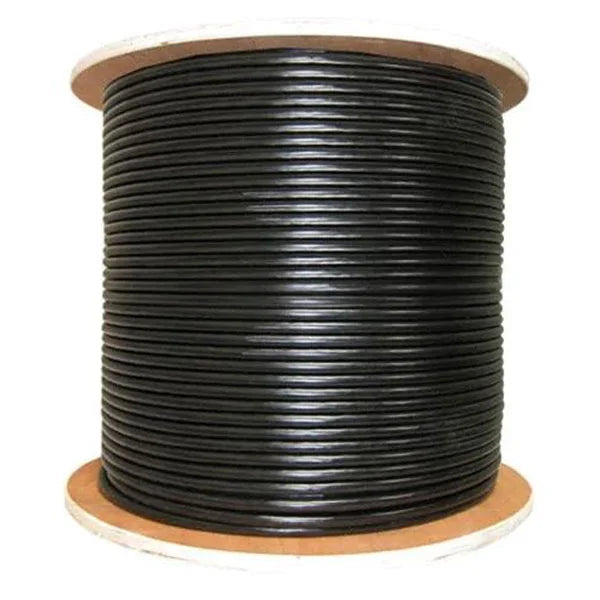
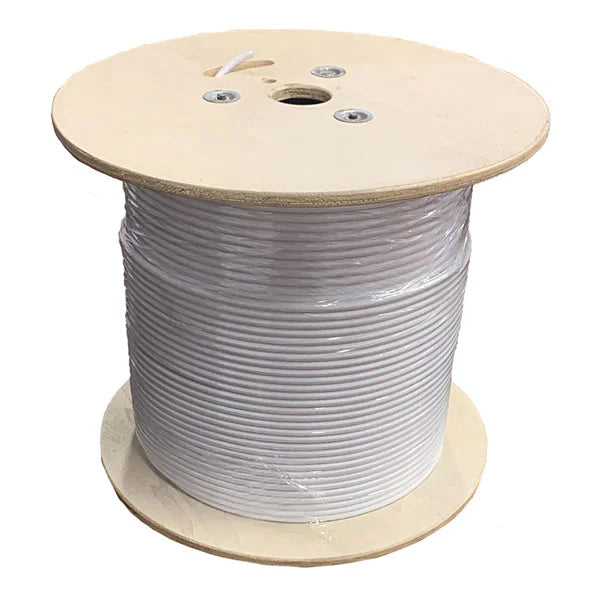
Bulk Coax Ethernet Cable
Description
About Ethernet Coax Cables
Our Ethernet Coax Cable collection is built for stable signal transmission across video, data, and broadband systems. These cables are widely used because they handle interference well and maintain signal integrity over longer distances.
They support large installations without interruptions or frequent joins. From commercial buildings to service providers, Ethernet coax cables remain a dependable choice for consistent performance.
The collection includes various coax cable types for indoor, outdoor, and specialized environments, giving installers flexibility while maintaining reliable connectivity and long-term operational stability.
Specification:
|
Cable Type |
Impedance |
Best Application |
Key Feature |
|
RG6 (Standard) |
75 Ohm |
Cable TV / Satellite / Internet |
The go-to cable for modern digital home entertainment. |
|
RG6 (Quad Shield) |
75 Ohm |
High-Interference Areas |
Four layers of shielding to block 5G/LTE/EM interference. |
|
RG59 |
75 Ohm |
Analog CCTV / Low-Frequency |
Thinner and more flexible; best for older camera systems. |
|
RG11 |
75 Ohm |
Long Distance / Backbones |
Thicker cable with very low signal loss over long runs. |
|
Conductor |
Solid Copper or CCS |
Solid copper is preferred for Power-over-Coax (CCTV). |
Key features
Strong Signal Integrity
Ethernet coax cables are designed to carry signals with minimal loss. The central conductor and surrounding layers help maintain clarity across long runs. This makes them suitable for applications where consistent signal quality is essential.
Effective Interference Control
The shielding layer reduces external interference from electrical sources. This feature helps maintain clear transmission in environments with multiple electronic systems operating nearby.
Durable Cable Construction
The outer jacket protects the internal structure from physical stress. It resists abrasion, bending, and environmental exposure, making Ethernet coax cable reliable during installation and long-term use.
Long-Distance Performance
Coax cables perform well across extended distances without major signal degradation. This capability supports large buildings, campuses, and distributed systems requiring extended cable runs.
Ethernet Installation Efficiency
Ethernet packaging allows continuous cable pulls during large projects. Installers benefit from fewer interruptions, reduced waste, and consistent cable quality throughout the installation.
Various type
RG6 Ethernet Coax Cable
RG6 Ethernet coax cable is commonly used for television and broadband services. It supports higher frequencies and offers better shielding, making it suitable for modern residential and commercial setups.
RG59 Ethernet Coax Cable
RG59 is used for shorter cable runs, especially in CCTV systems. It offers adequate performance for video transmission where distances remain limited.
Quad Shield Coax Cable
Quad shield coax cable includes additional shielding layers. This design provides enhanced protection against signal interference in electrically noisy environments.
Plenum Rated Coax Cable
Plenum-rated coax cable is used in air-handling spaces. The jacket material helps limit smoke spread and meets building safety requirements for commercial installations.
Outdoor Coax Cable
Outdoor coax cables feature weather-resistant jackets. They are suitable for external routing between buildings or outdoor equipment exposed to moisture and temperature changes.
Best use cases
Television Distribution Systems
Ethernet coax cable is widely used for cable television and satellite systems. It ensures consistent signal delivery across multiple connection points within buildings. Coax cable for TV is still a popular choice today.
Broadband Internet Installations
Internet service providers rely on coax cables for stable data transmission. Ethernet coax supports efficient deployment across residential and commercial properties.
Security and Surveillance Systems
CCTV setups commonly use Ethernet coax cable for reliable video feeds. The cable supports clear image transmission and stable system performance.
Commercial Buildings
Offices, hospitals, and retail spaces use Ethernet coax cable for integrated communication systems. The cable supports an organized infrastructure across large facilities.
Network Infrastructure Projects
Large-scale infrastructure projects use coax cables for structured installations. The consistent performance supports long-term network reliability.
Build dependable signal networks with Ethernet coax cables from TS Cables, delivering consistent performance and installation confidence for every project.
Faqs
What is a coax cable for?
A coax cable is used to transmit video, internet, and radio frequency signals with minimal interference over long distances.
Where does the coax cable go?
A coax cable connects devices like TVs, modems, or cable boxes to wall outlets or signal splitters.
Where to buy coax cable?
Coax cables are available from electronics stores, network suppliers, hardware shops, and trusted online retailers.
How to terminate a coax cable?
Strip the cable layers, attach an F-type connector, and secure it using a coax crimping or compression tool.
Does a modem need a coax cable?
Yes, cable modems require a coax cable to connect to the internet service line from the provider.
How to convert a coax cable to HDMI to a TV?
Use a digital converter box that changes the coax signal into an HDMI output for modern televisions.
How to plug in a coax cable?
Align the connector with the port and turn it clockwise by hand until it feels snug.
How to unscrew a coax cable?
Turn the connector counterclockwise by hand. Use light pressure to avoid damaging the connector or port.
Are coax cables still used?
Yes, coax cables are still widely used for cable television, broadband internet, and security systems.