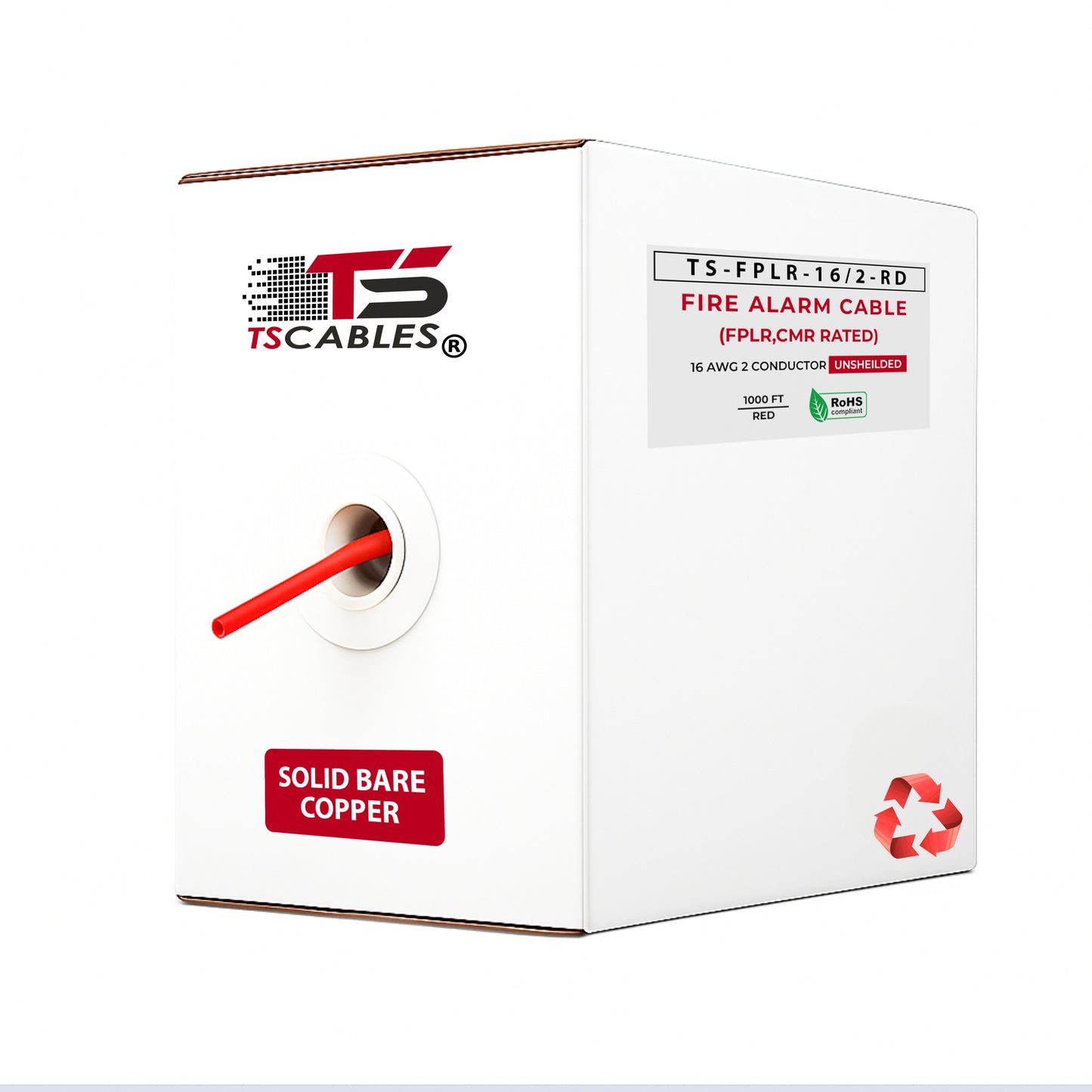
Key Features
Heavier 16-Gauge Conductors
The 16-gauge design supports stronger signal transmission. It helps reduce voltage drop across longer riser runs.
Riser-Rated Fire Safety Jacket
The outer jacket is approved for vertical pathways. It limits flame spread between building levels.
Two-Conductor Configuration
A 16/2 layout includes two insulated wires. This supports common fire alarm circuit requirements.
Code-Ready Construction
16/2 Fire Alarm Riser cables meet building standards. They are suitable for regulated fire alarm installations.
Various Types
Solid Copper Fire Alarm Riser
Solid conductor cables are used for permanent routing. They provide dependable performance once installed.
Stranded Fire Alarm Riser Cable
Stranded options allow easier pulling and bending. They work well in complex vertical paths.
Shielded Fire Alarm Riser Cable
Shielded versions reduce electrical interference. They are useful near power or communication wiring.
Best Use Cases
Long Vertical Fire Alarm Runs
16/2 Fire Alarm Riser cables support extended distances. They help maintain reliable signal strength.
Commercial and Institutional Buildings
Used in offices, hospitals, and schools. They support structured fire alarm systems.
High-Demand Fire Alarm Circuits
Thicker conductors handle higher current loads. They improve system stability across floors.
Strengthen vertical fire alarm systems with 16/2 Fire Alarm Riser cables built for reliable signal flow and code-compliant installations.
FAQs
What is a 16/2 Fire Alarm Riser cable?
It is a riser-rated fire alarm cable with two 16-gauge conductors used for vertical installations.
Why choose 16/2 over 18/2 fire alarm riser?
16/2 provides thicker conductors that help reduce voltage drop over longer distances.
Where can the 16/2 Fire Alarm Riser be installed?
It is installed in vertical shafts, walls, and stairwells between floors.
Is the 16/2 Fire Alarm Riser plenum rated?
No, plenum spaces require plenum-rated fire alarm cable.
Does the 16/2 Fire Alarm Riser require shielding?
Shielding is optional and depends on interference levels near the installation.