Discount Applied - You're Saving More
Fiber Pigtails Cables
Indoor Ethernet Cables Plenum Ethernet Cables Riser Ethernet Cables
Outdoor Ethernet Cables Shielded Ethernet Cables ETL Listed Cables Cat6 ETL Listed Cables Cat6A ETL Listed Cables
Fire Alarm Cables Speaker Wire Cables - Clearance Item
-
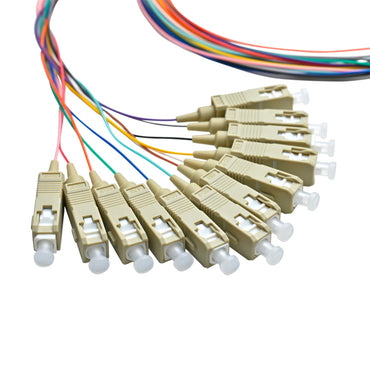
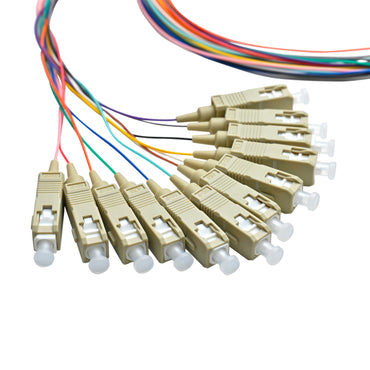
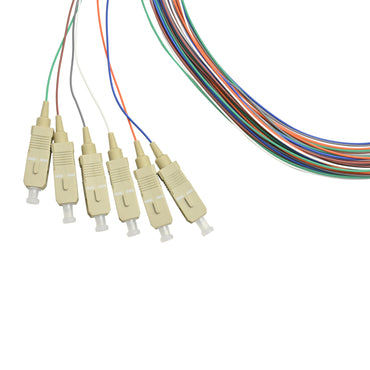
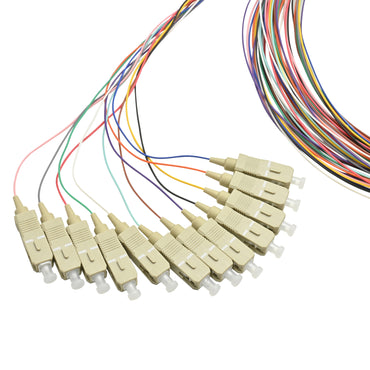
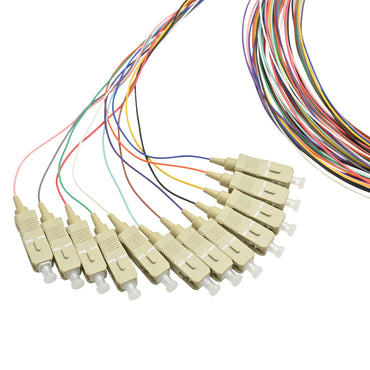
Pigtail SC/UPC 12 colors OM4 0.9mm OFNR 3M, semitight
$55.10 USD$55.10 USD$55.10 USD52 in stock -
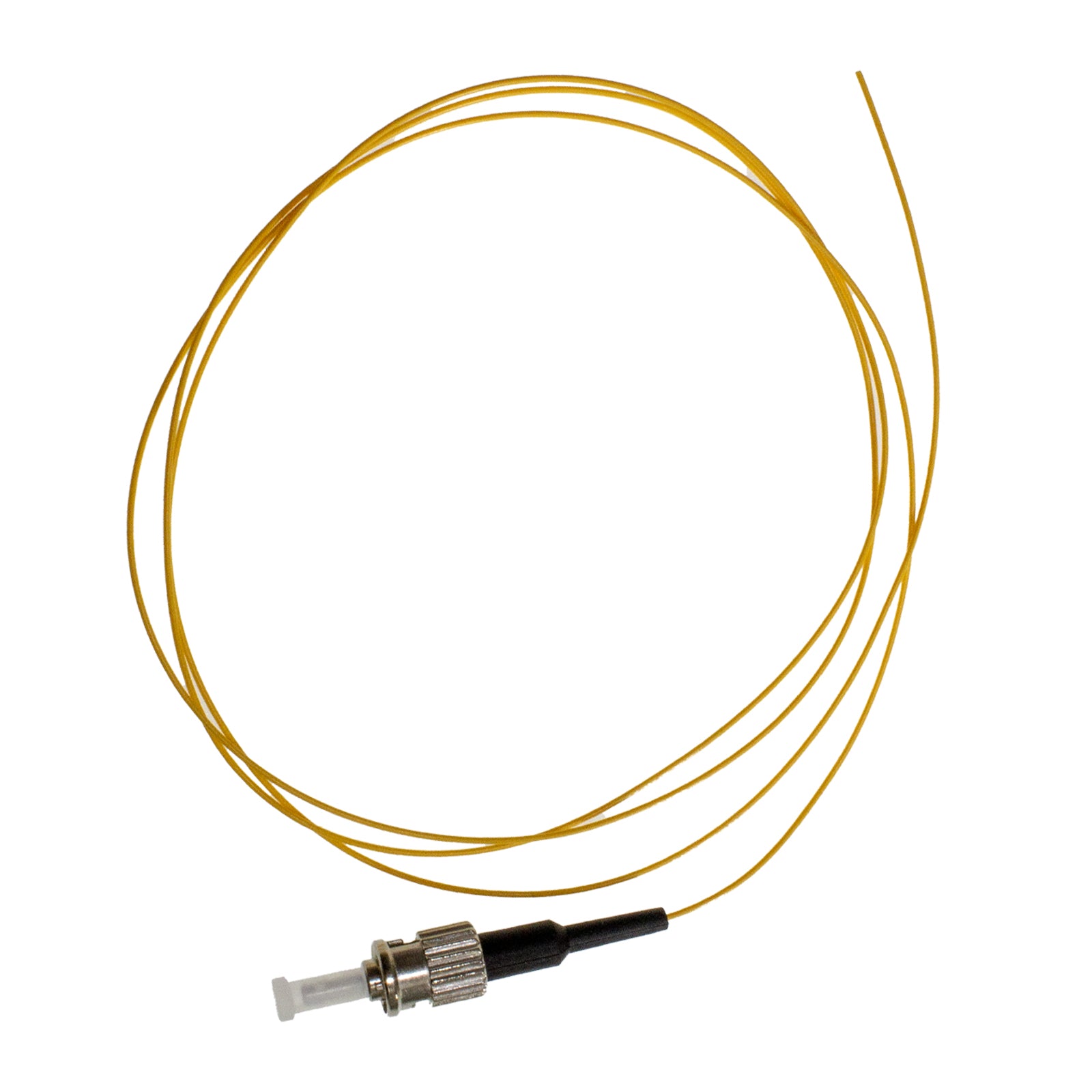
Pigtail ST/UPC SM G657A1 SX 0.9mm OFNR Yellow, tight buffer
From $4.10 USD$4.40 USD$4.40 USD488 in stock -
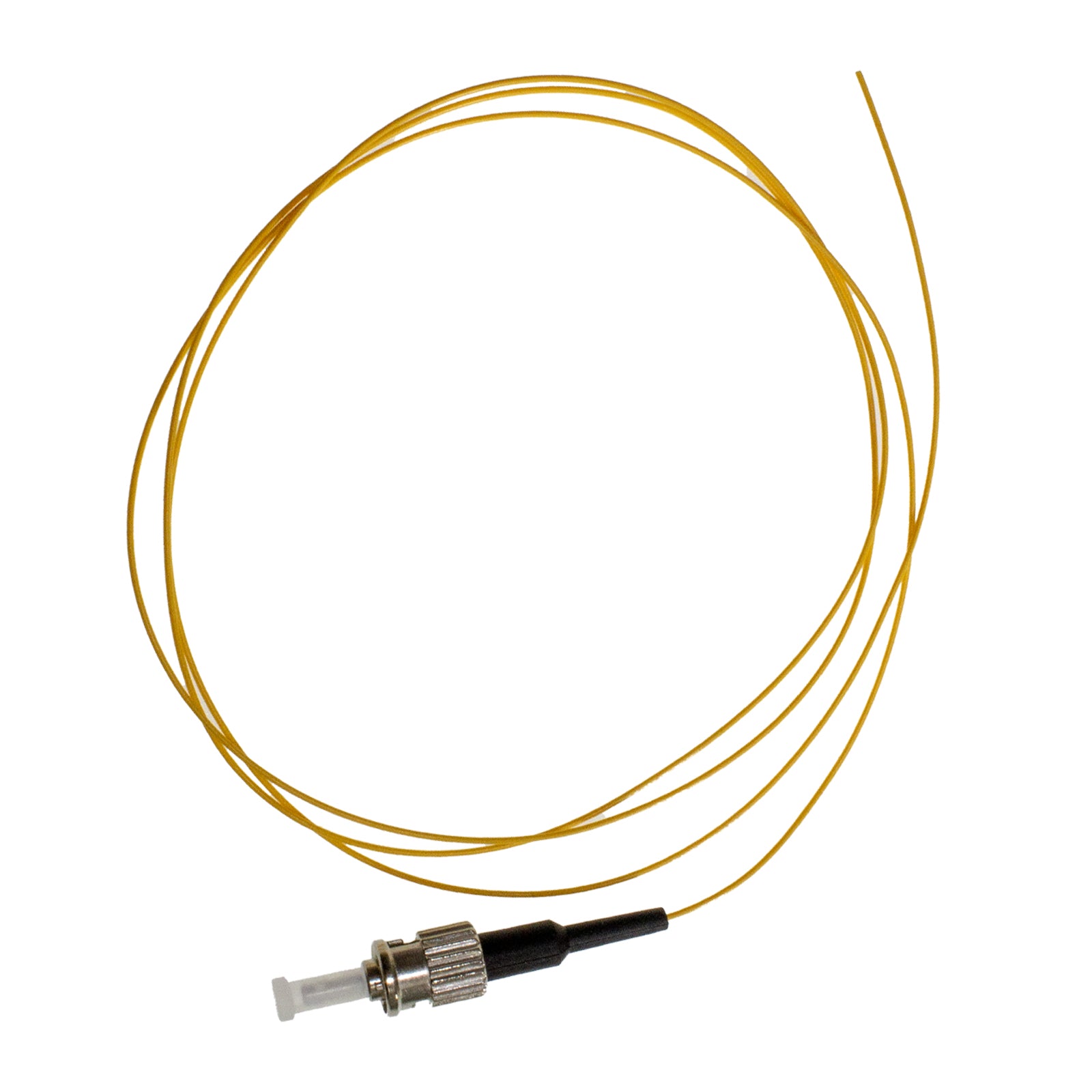
Pigtail ST/UPC SM G657A1 SX 0.9mm OFNR Yellow, semitight
From $4.10 USD$4.40 USD$4.40 USD526 in stock -
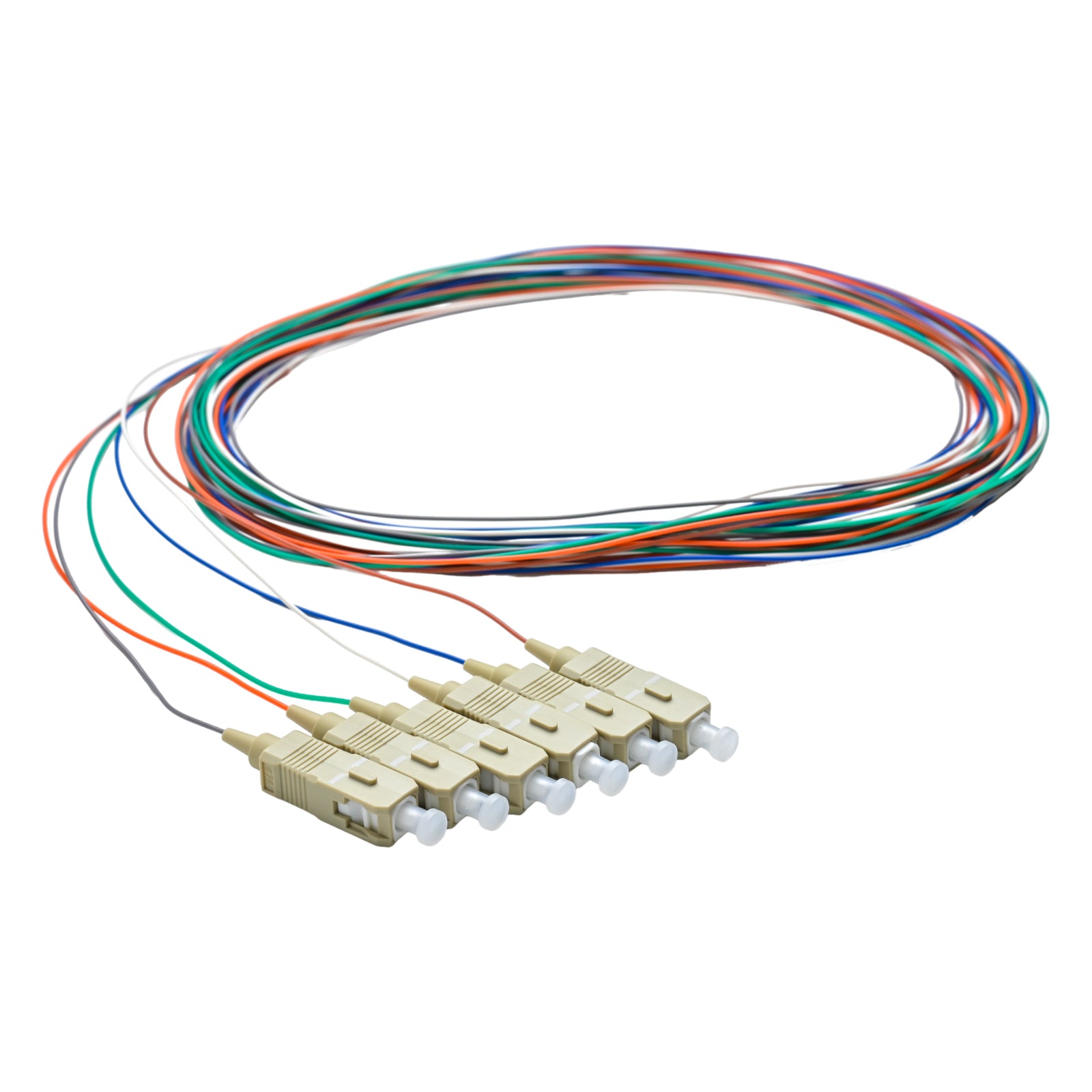
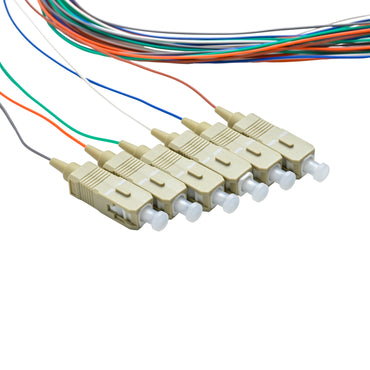
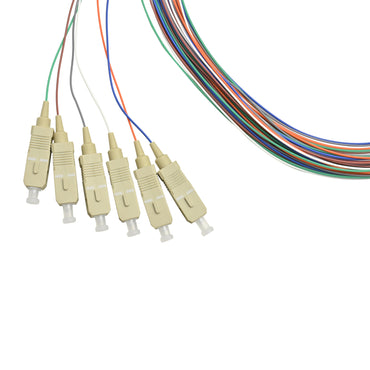
Pigtail SC/UPC 06 colors OM4 0.9mm OFNR 3M, tight buffer
$32.00 USD$32.00 USD$32.00 USD191 in stock -
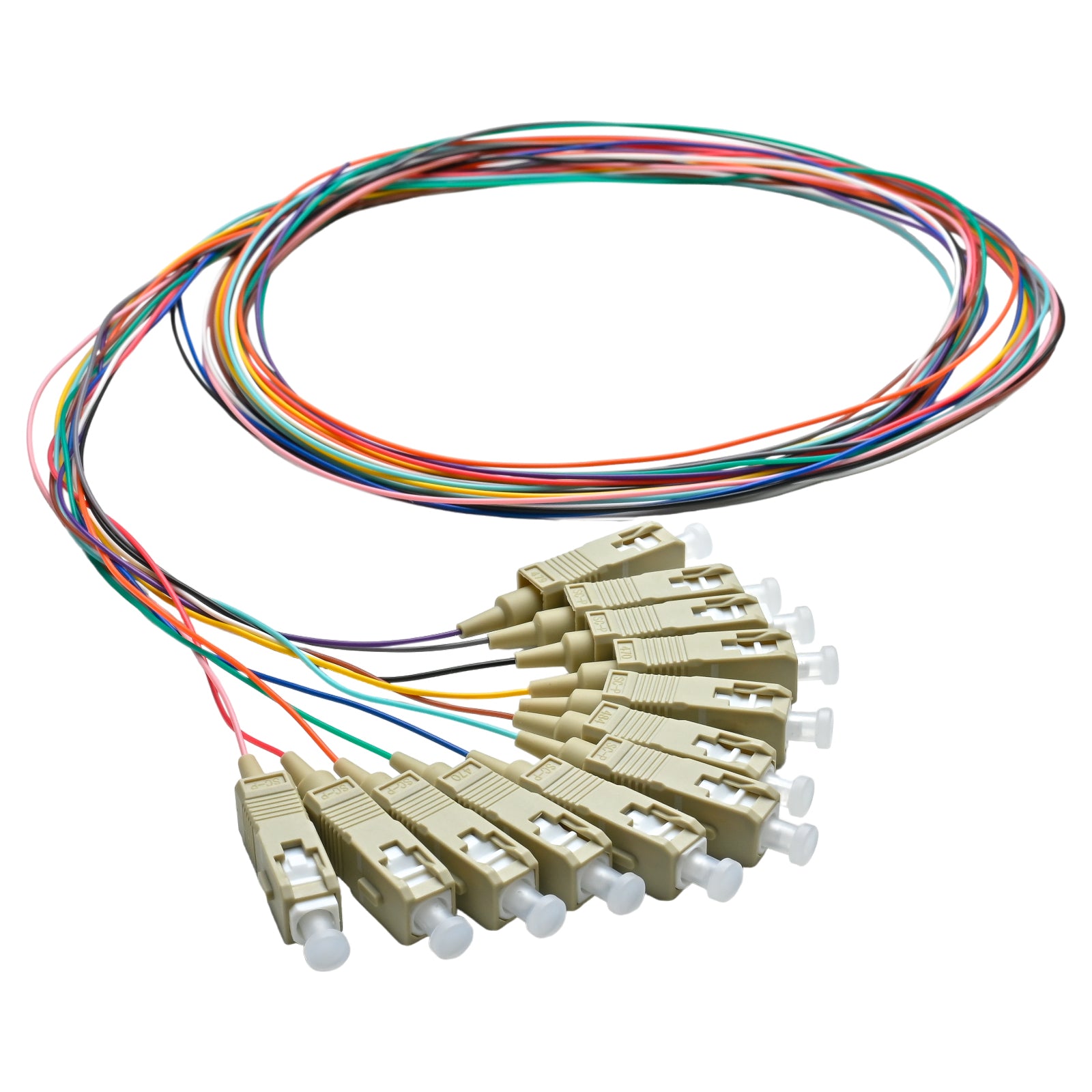
Pigtail SC/UPC 12 colors OM4 0.9mm OFNR 3M, tight buffer
$55.10 USD$55.10 USD$55.10 USD89 in stock -
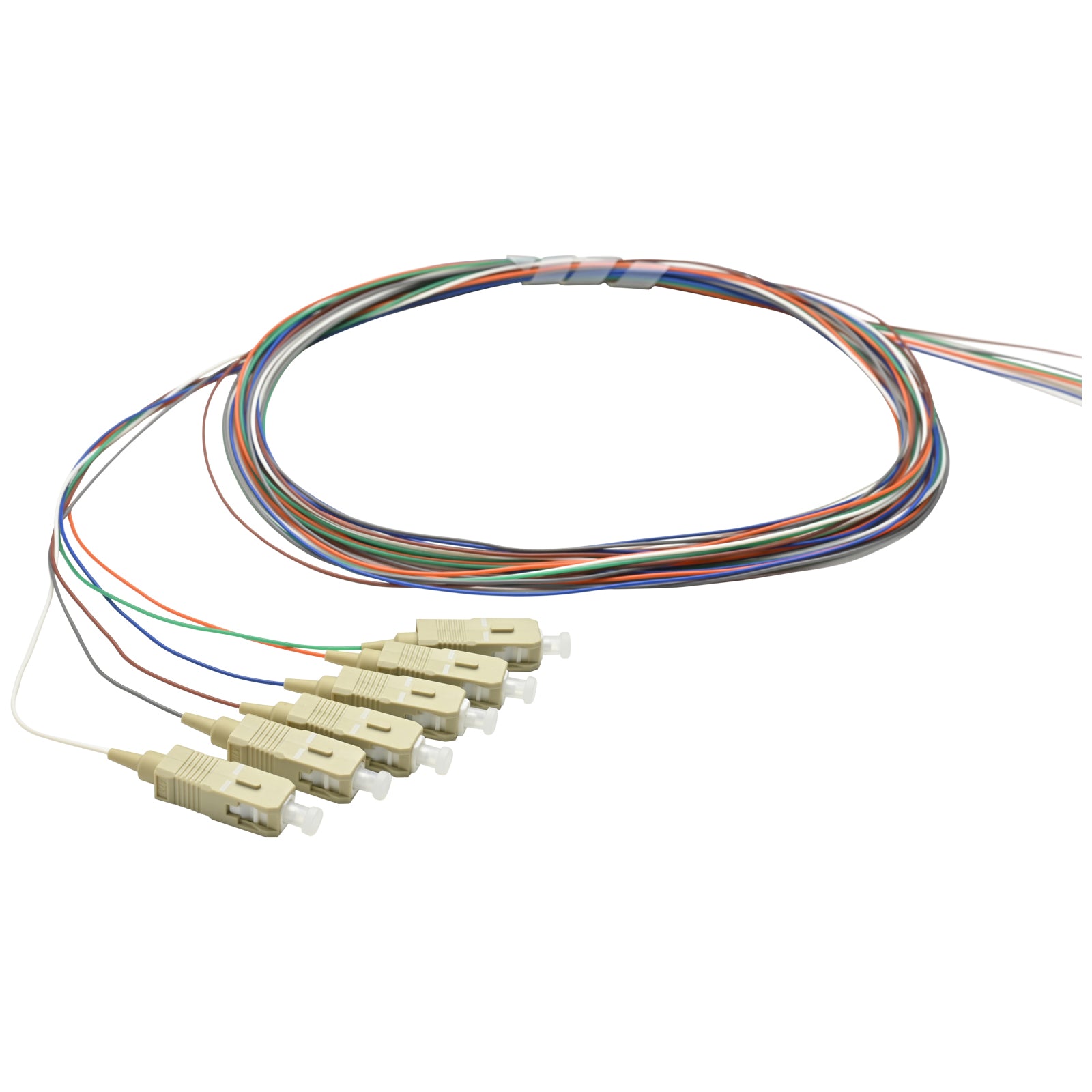
Pigtail SC/UPC 06 colors OM4 0.9mm OFNR 3M, semitight
$32.00 USD$32.00 USD$32.00 USD53 in stock -
Pigtail SC/UPC 06 colors OM3 0.9mm OFNR 3M, tight buffer
$19.25 USD$19.25 USD$19.25 USD181 in stock -
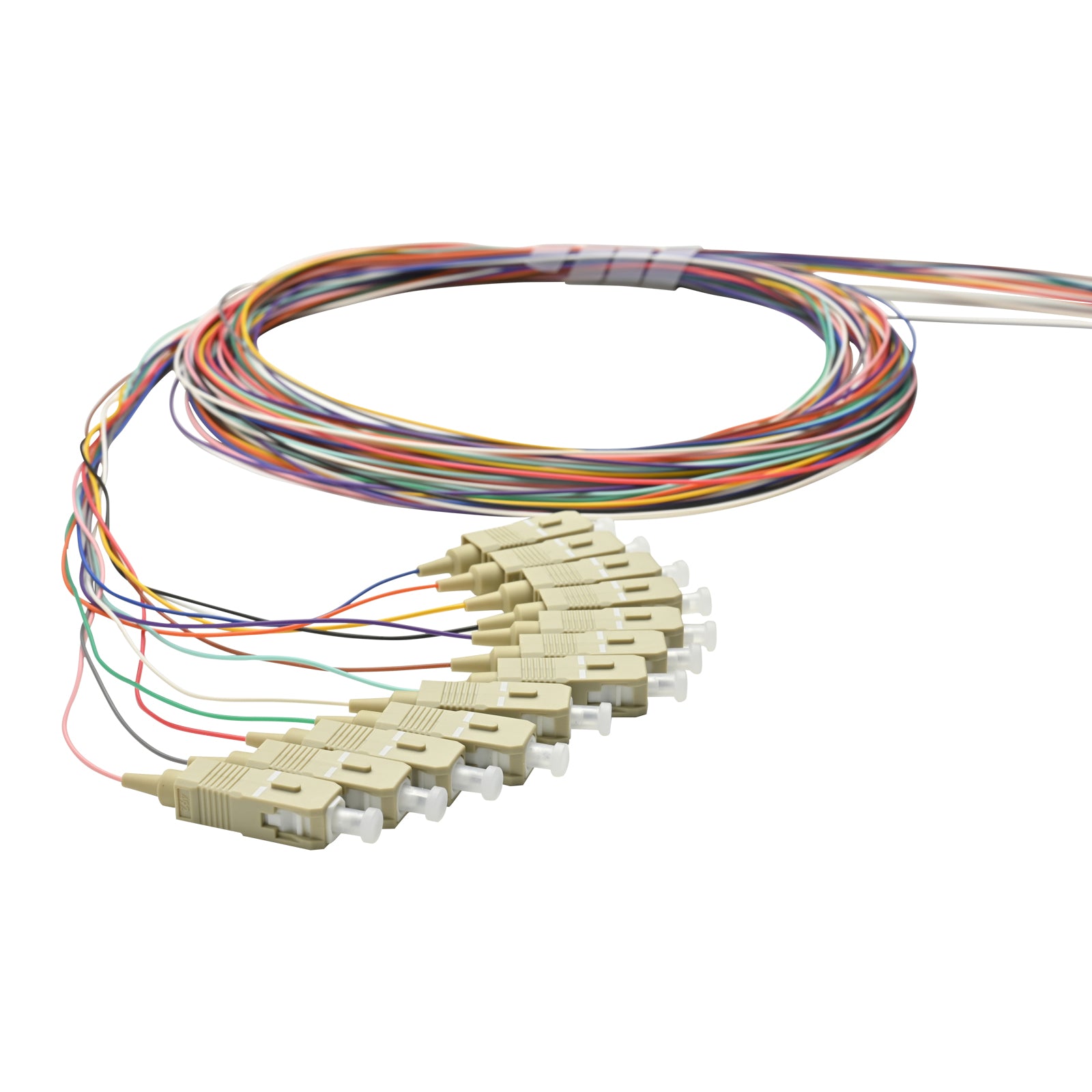
Pigtail SC/UPC 12 colors OM3 0.9mm OFNR 3M, tight buffer
$40.60 USD$40.60 USD$40.60 USD174 in stock -
Pigtail SC/UPC 06 colors OM3 0.9mm OFNR 3M, semitight
$19.25 USD$19.25 USD$19.25 USD49 in stock -
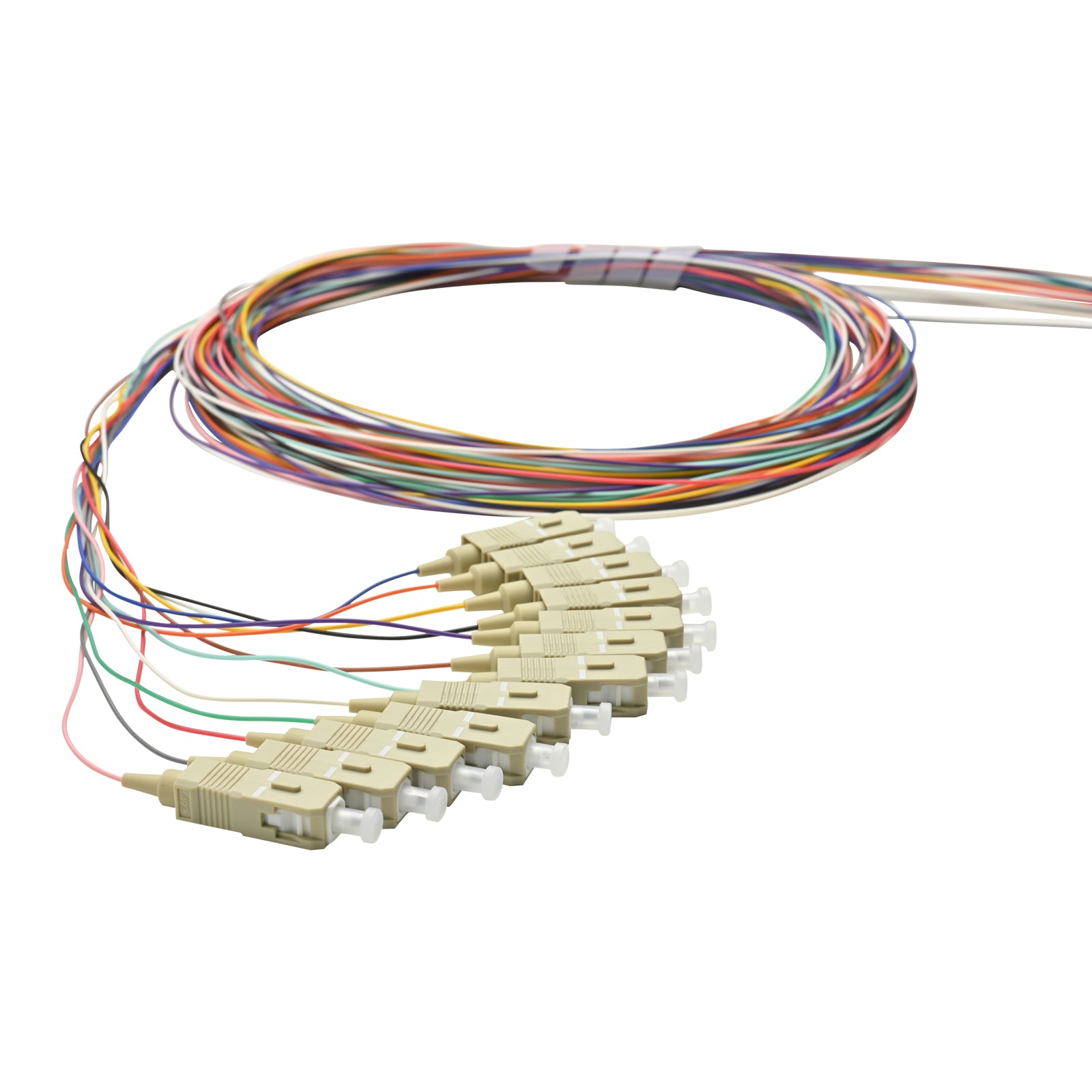
Pigtail SC/UPC 12 colors OM3 0.9mm OFNR 3M, semi tight
$40.60 USD$40.60 USD$40.60 USD177 in stock -
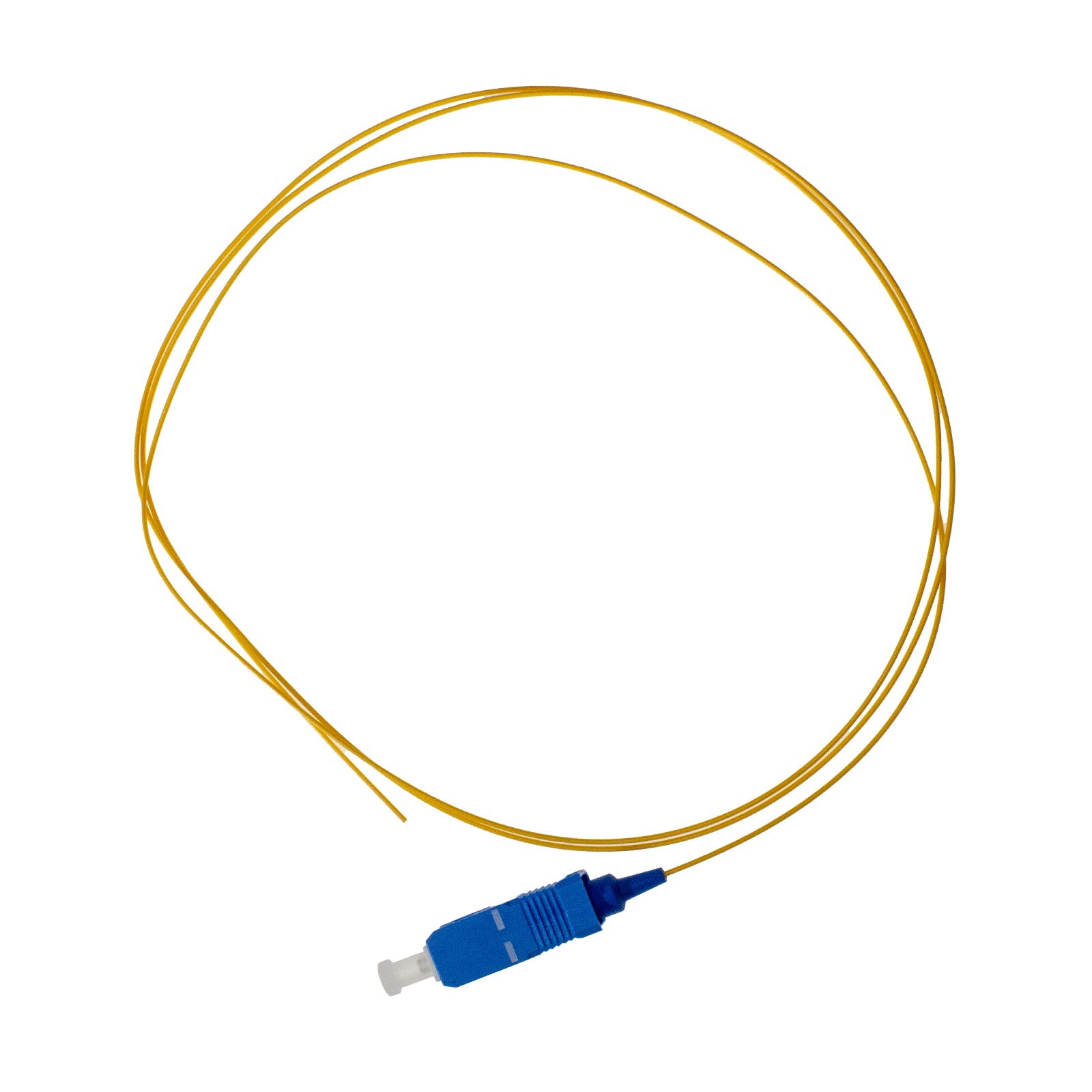
Pigtail SC/UPC SM G657A1 SX 0.9mm OFNR Yellow, tight buffer
From $4.10 USD$4.40 USD$4.40 USD100 in stock -
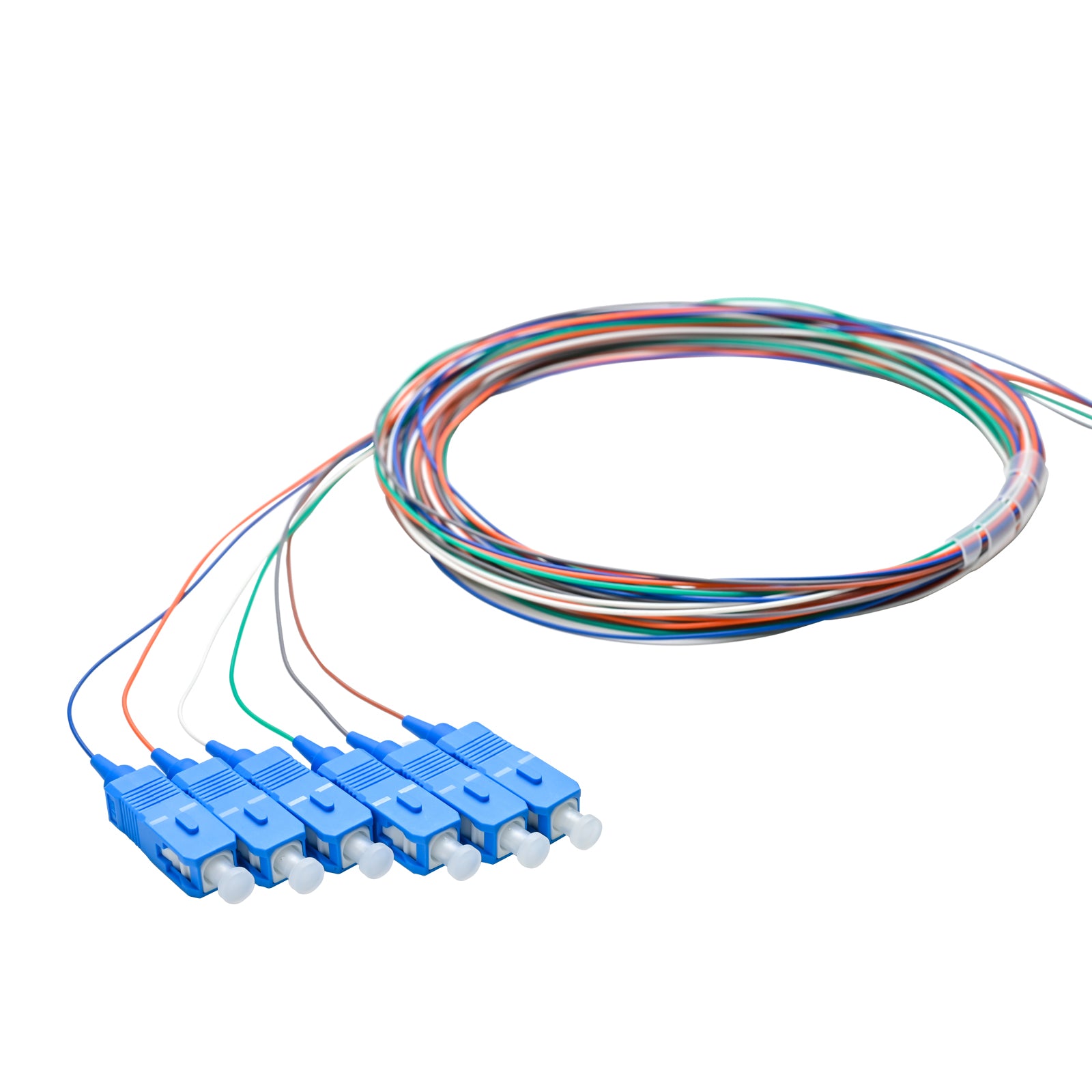
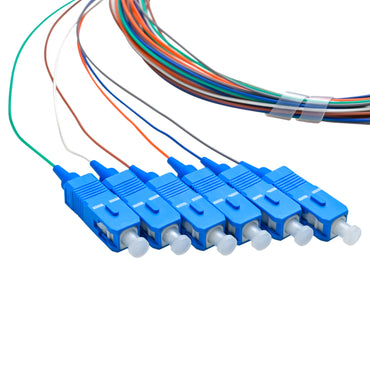
Pigtail SC/UPC 06 colors SM G657A1 0.9mm OFNR 3M, tight buffer
$16.00 USD$16.00 USD$16.00 USD342 in stock
About Fiber Optic Pigtails
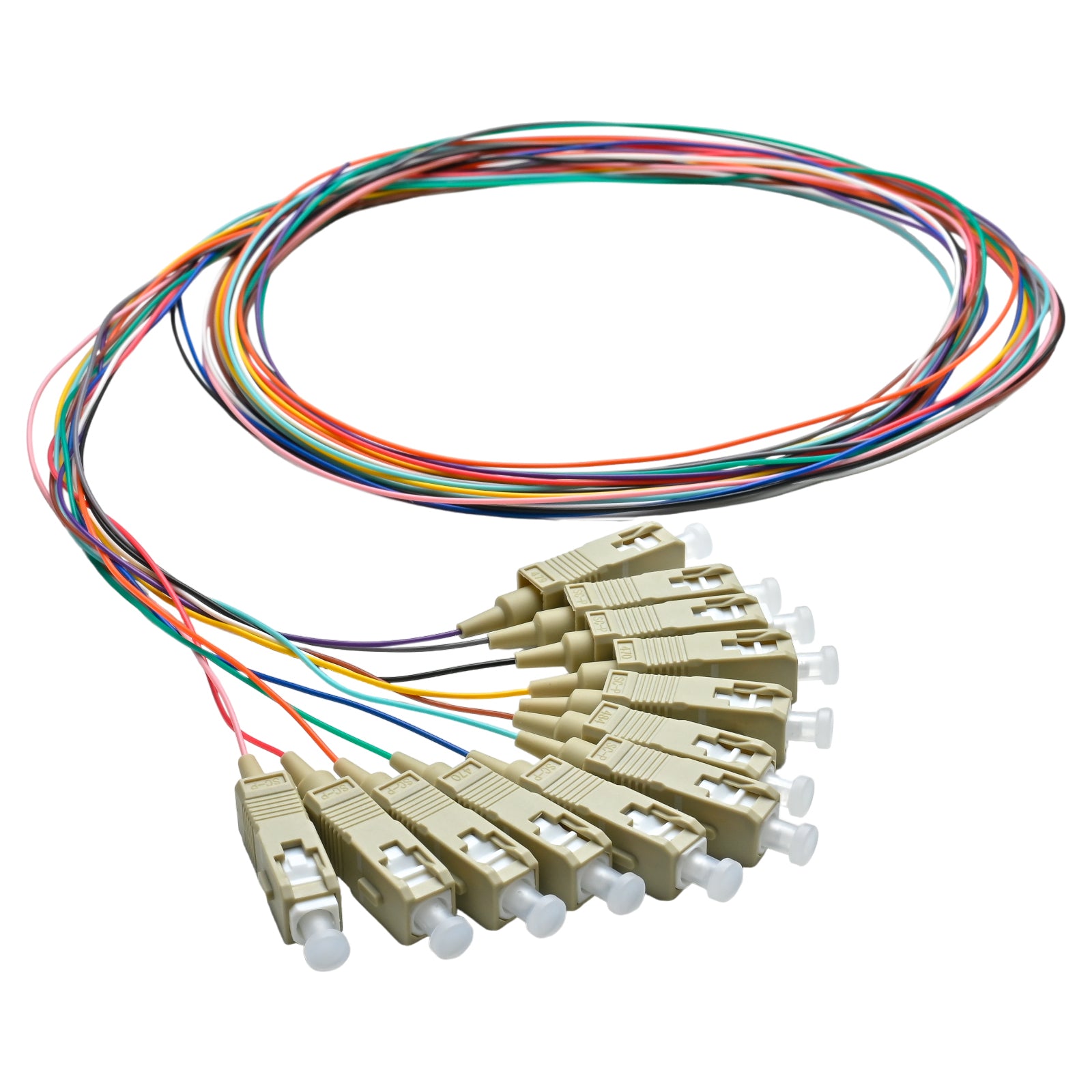
A fiber pigtail is a short length of fiber with a factory-installed connector on one end and bare fiber on the other. Installers fusion splice or mechanically splice that bare end to an incoming cable. This gives every strand a clean and tested termination without hand-polishing a connector in the field.
That's why pigtail fiber optic assemblies show up in nearly every patch panel and splice tray. You will also find them in wall-mount enclosures. Our pigtails come in single-mode and multimode versions with LC, SC, ST, and FC connector options.
Pick a single-strand pigtail cable for small jobs or a multi-strand assembly for dense panels. Factory polishing keeps insertion loss and back reflection low. This ensures that each splice starts from a known-good end face.
| Criteria | Details |
|---|---|
| Construction | Connector on one end, bare fiber on the other |
| Fiber Types |
|
| Connector Options | LC, SC, ST, FC |
| Polish | UPC (single-mode and multimode), APC (single-mode) |
| Buffer | 900 µm tight buffer |
| Fiber Count | Single-strand and multi-strand (6- and 12-fiber) |
| Jacket | Jacketed or unjacketed, LSZH and riser options |
| Termination Method | Fusion or mechanical splice |
| Color Code | Yellow (OS2), aqua (OM3/OM4), orange (OM1) |
Factory-Polished Connectors
Hand-terminating a connector on a ladder is slow and easy to get wrong. Each pigtail arrives with a connector that was polished and inspected in a controlled setting. You skip the epoxy and the curing. It also saves the hassle of the polishing film. What you get is consistent end faces across every port in the panel.
Low Loss and Low Back Reflection
A good splice only helps if the connector on the other side performs well. Our pigtails are built for low insertion loss and strong return loss. APC versions use an 8-degree angled end face, which keeps reflected light out of sensitive single-mode gear like PON and video systems.
Tight-Buffered Fiber That Handles Well
The 900 µm tight buffer protects the glass inside splice trays and panels. It strips cleanly and routes easily around tight corners. There is no need for gel cleanup or a fan-out kit. Field techs can work faster with fewer broken strands.
Clear Color Coding
Multi-strand sets follow standard TIA-598 color coding. Blue, orange, green, and brown come first, and the sequence continues through all twelve colors. Matching strands to splice positions becomes quick and mistake-free, even in a crowded enclosure.
Patch Panel and Enclosure Termination
Most pigtails end up in a rack-mount or wall-mount enclosure. The connector snaps into an adapter panel. The bare end gets spliced to the backbone cable in the splice tray behind it.
Outside Plant to Indoor Transitions
Outdoor loose-tube cable isn't rated for long indoor runs. Splicing it to pigtails at the building entrance gives you a clean handoff to indoor-rated patch cords and equipment.
FTTH and PON Networks
Service providers use single-mode APC pigtails in splice closures, distribution hubs, and customer termination boxes. The angled polish keeps reflections low on video and GPON links.
Repairs and Restorations
A crushed connector doesn't mean pulling a new cable. Trim the damaged end, connect a new fiber pigtail connector, and the link is up and running in an hour.
What is a pigtail used for?
It ends a fiber cable. The bare end is spliced to an incoming strand, and the connector end is connected to a patch panel adapter or optical equipment.
What is the difference between a pigtail and patch cord?
A pigtail will only have a connector at one end. A patch cord is a direct connection between equipment ports with connectors at both ends, with no splicing.
Which pigtails should I use: UPC or APC?
UPC is compatible with most data networks. APC is used for single-mode links that require extremely low back reflection, including PON, RF video, and long-haul telecom.
May I cut a patch cord in half to get two pigtails?
You can, but it doesn't usually work out. Purpose-built pigtails are more cost-effective. They are also tight buffer splice-friendly and do not risk damaging the fiber during the cut.
What is the most popular type of connector?
North America is the leading market for LC and SC. LC is space-efficient in dense panels. SC is still popular in telecom and FTTH equipment.
Is it necessary to use a fusion splicer to install a pigtail?
The lowest-loss and most durable joint is obtained by fusion splicing. Mechanical splices are used for rapid repairs, but tend to cause more loss over time.