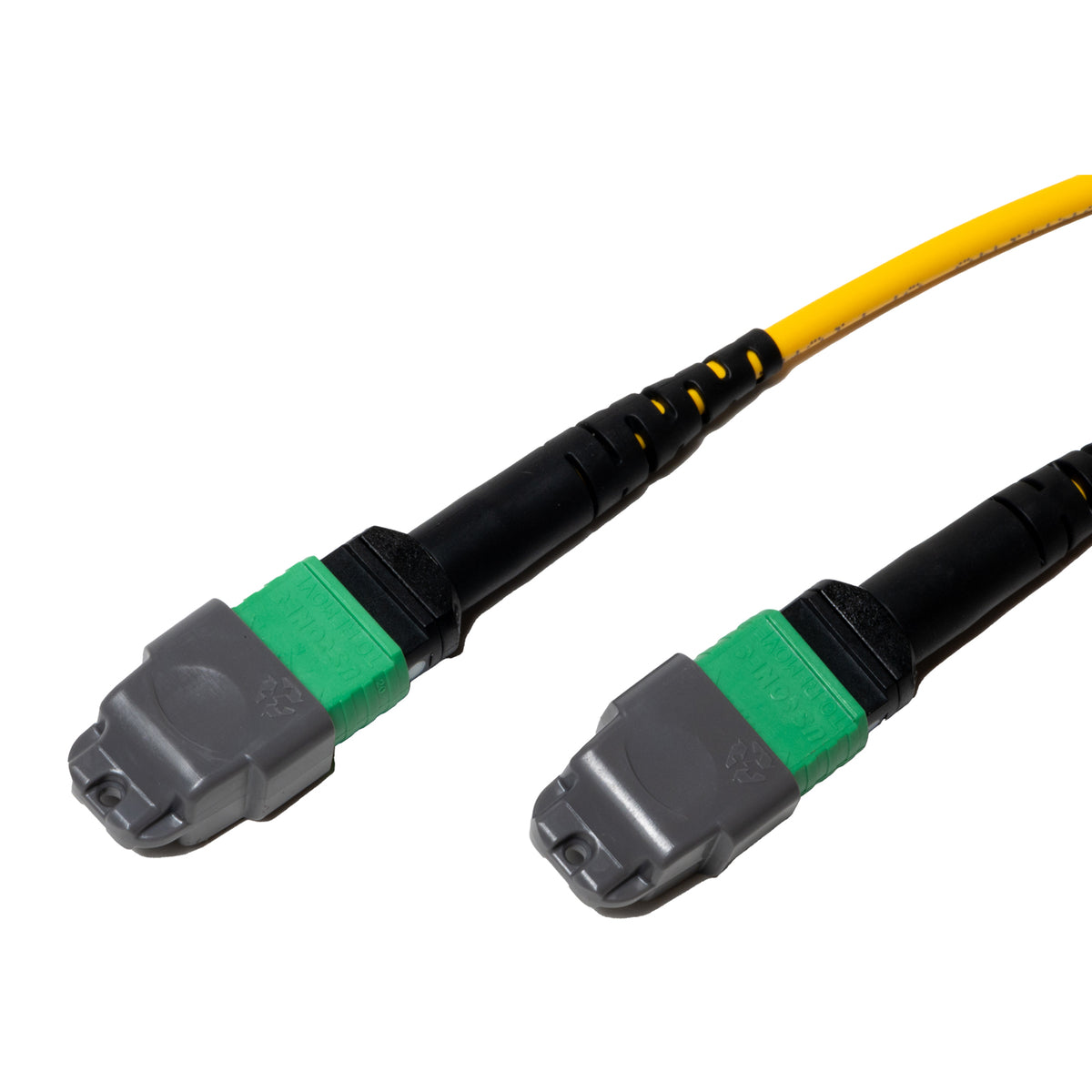
Ready for 100G and 400G Single-Mode Optics
PSM4 and DR4 transceivers send data over parallel single-mode lanes. A 400G DR4 module uses four transmit fibers and four receive fibers on a 12-position MTP connector. Type B wiring aligns those lanes without extra parts. Each DR4 lane covers up to about 500 meters, well past what multimode can manage at that speed.
Mirrored Fiber Positions
Type B trunks are key-up on both ends. Fiber 1 meets fiber 12, fiber 2 meets fiber 11, and the pattern continues across the ribbon. This built-in flip handles the transmit-to-receive crossover inside the cable. Keep every component in the channel on the same polarity method, or the link won't come up.
Elite Connectors for Tight Budgets
High-speed single-mode links leave little room for wasted light. Standard MPO connections can eat around 0.6 dB each. Elite connectors stay at 0.35 dB or less. That margin gives you space for a patch panel or two without risking bit errors or flapping links.
A Backbone That Grows With You
Single-mode glass doesn't cap your future speed the way older multimode grades can. The same trunk that runs 100G today can carry 400G and faster optics tomorrow. You only change the transceivers, which saves a costly re-pull years down the road.
Why Single-Mode Makes Sense Even for Short Links
Single-mode optics used to cost far more than multimode. That gap has narrowed a lot. A 400G DR4 module needs only eight fibers, while some multimode 400G options need sixteen. Fewer fibers means smaller trunks, lighter trays, and simpler cassette layouts. For many new builds, single-mode is now the practical default.
Plenum Jacket in Single-Mode Yellow
The OFNP jacket passes NFPA 262 testing for flame spread and smoke, so it's cleared for air-handling spaces. Yellow follows the TIA-598 color code for single-mode fiber. Techs can tell it apart from aqua multimode trunks in a shared tray.
Care and Handling
Single-mode end faces are tiny and unforgiving. Inspect them with a scope, clean them with an MTP click cleaner, and replace dust caps whenever a port sits empty. Coil spare length loosely and avoid tight bends at the connector boot.