Where This Cord Fits
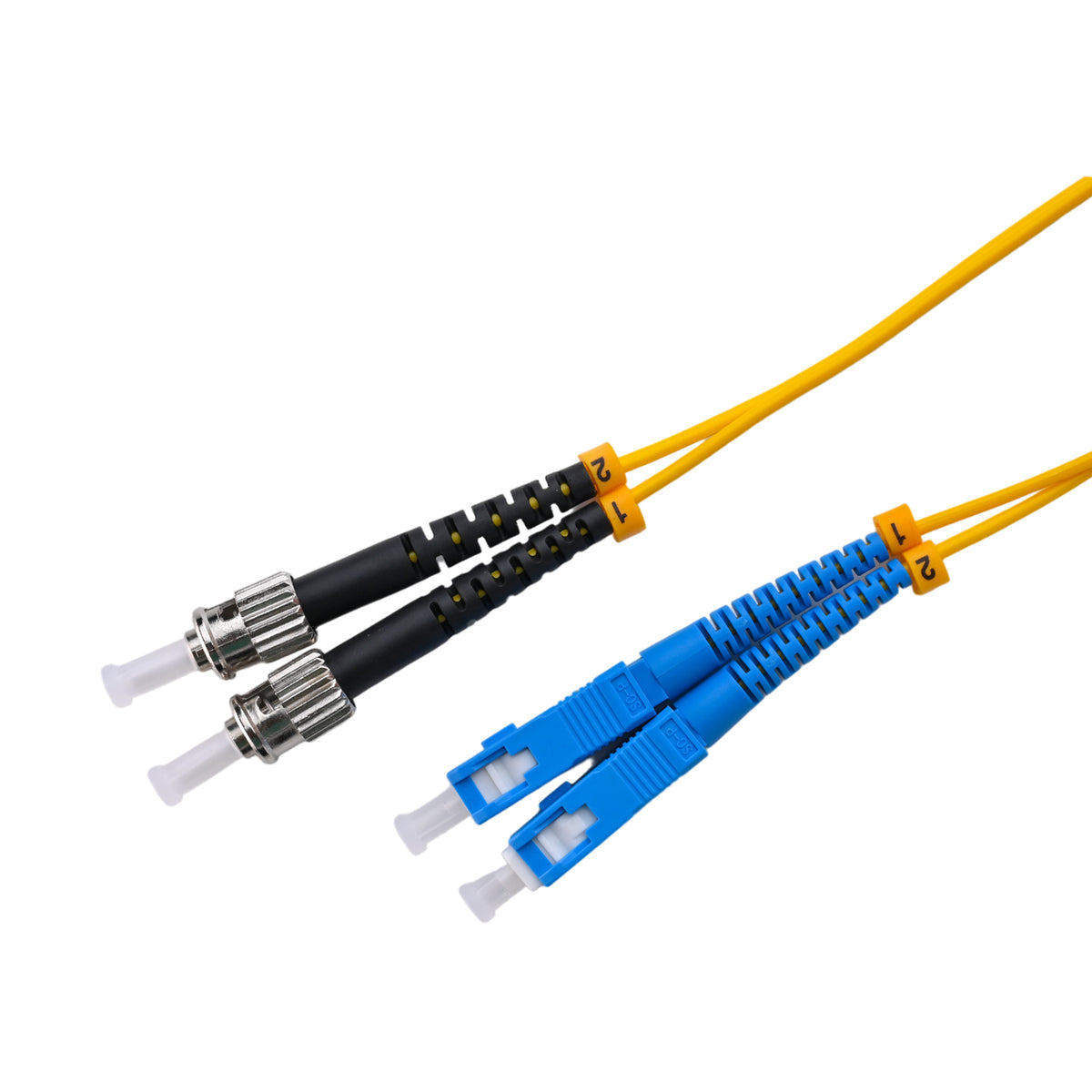
Utilities, universities, and telecom sites often have single-mode backbones terminated on ST panels. New optical terminals, converters, and transport gear tend to ship with SC ports. This cord joins the two in a single clean connection.
Low Loss Over Long Distances
OS2 single-mode fiber carries light on a 9 µm core with very low attenuation. Paired with the right transceivers, links can stretch across a campus or between buildings miles apart. A short patch cord adds almost no loss.
G.657.A1 Bend Tolerance
The fiber inside is bend-insensitive. It handles a 10 mm minimum bend radius and stays compatible with standard G.652.D cable. Tight enclosures and busy patch panels become far more forgiving.
SC and ST Side by Side
The SC end uses a square body that snaps in and pulls out. The ST end uses a keyed bayonet that locks with a quarter turn. Both ends share a 2.5 mm ceramic ferrule and a UPC polish, so the optical performance stays consistent across the cord.
Polarity and Testing
Standard A-to-B polarity crosses transmit and receive between the ends. If the link stays down after installation, swap the SC or ST legs at one end. A visual fault locator also makes a quick continuity check easy.
Care and Code
The OFNR jacket meets riser fire ratings for indoor and vertical spaces. Choose a plenum-rated cord for return-air ceilings and raised floors. Clean all four end faces before connecting, and never mate the UPC ends with APC ports.
Checking Loss Before Go-Live
Hybrid connections add a mated pair at each end, so measure the link before putting it into service. A power meter reading tells you whether the total loss fits your optics. If the number looks high, clean every end face and test again. Dirt causes far more failures than broken fiber ever does.