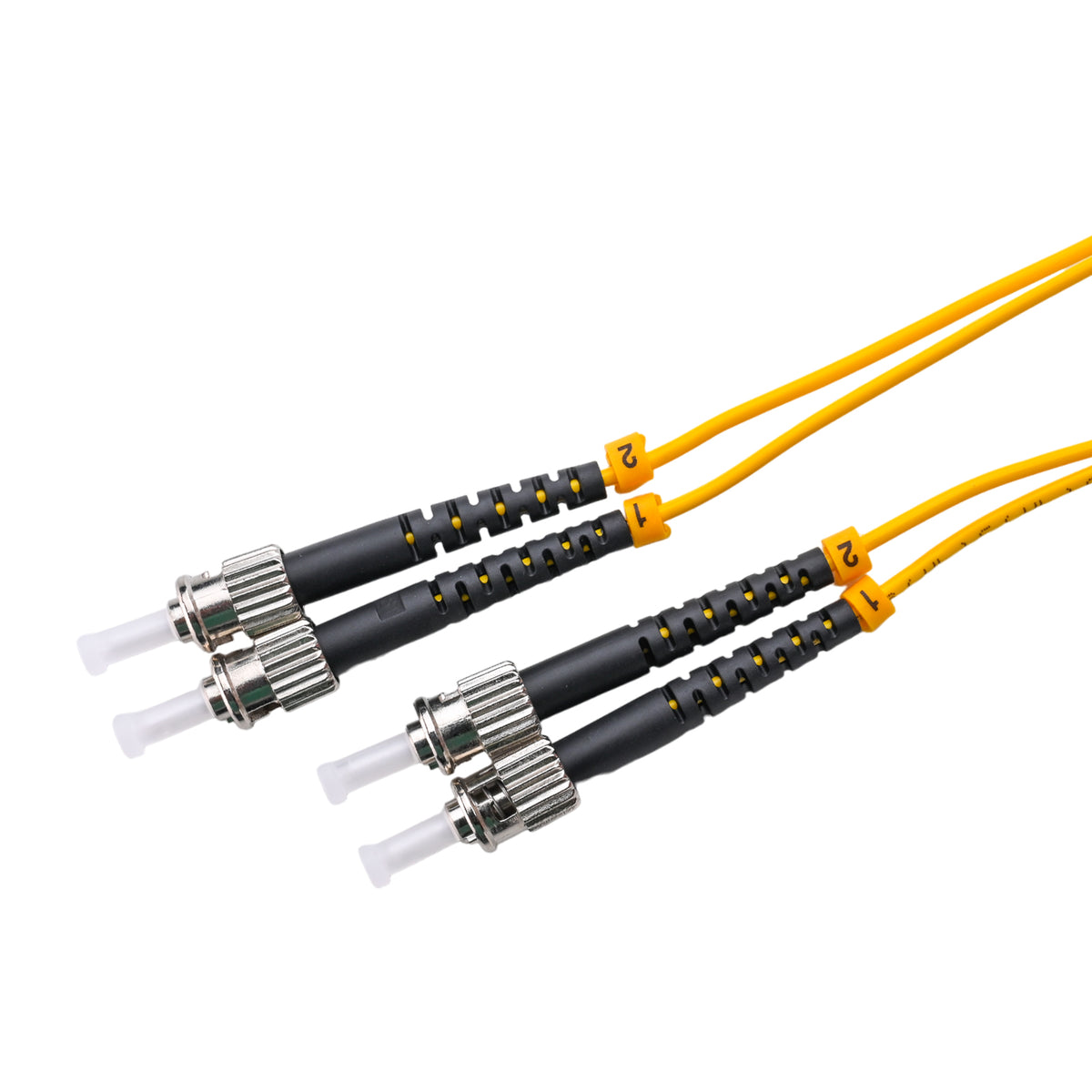
A Secure Lock for Tough Environments
ST connectors twist into place and stay put. That bayonet grip makes them a favorite in substations, factories, and control rooms, where vibration can loosen push-on connectors. Single-mode ST cords are common on protection relays, SCADA links, and older long-haul equipment.
Long-Distance Single-Mode Fiber
OS2 fiber has a 9 µm core and very low loss per kilometer. With the right optics, it can link sites many kilometers apart. Short patch cords barely touch your loss budget, which leaves plenty of room for the main run.
Bend-Insensitive G.657.A1 Glass
G.657.A1 fiber tolerates tighter bends than standard single-mode. It's rated for a 10 mm minimum bend radius and works with existing G.652.D cable. That's useful inside cramped cabinets and enclosures where cords can't always follow a gentle path.
UPC Polish
Both ends use a flat UPC polish for low insertion loss and solid return loss. This finish works with most single-mode data and control equipment. Don't connect UPC to angled APC ports, since the mismatch causes heavy loss.
Duplex and Polarity
The zipcord holds two fibers that split apart for spaced ports. Standard A-to-B polarity crosses transmit to receive between the ends. Swap the ST legs at one end if a link stays dark.
Riser Jacket and Care
The OFNR jacket meets riser fire ratings for indoor and vertical runs. Use plenum cords in air-handling spaces. Turn ST connectors gently, clean every end face before mating, and keep dust caps on spare cords.
Labeling and Documentation
Utility and industrial sites often face strict audits. Label both ends of each cord with the panel, port, and circuit ID. Record the date and the measured loss when you install it. Clear records save hours during an outage. They also help new staff understand which link feeds which relay or controller.